

The International Monetary Fund expects India's economic growth rate to moderate to 7.5-7.75 per cent this fiscal, from 8.5 per cent in 2010-11, on account slowing investments and sluggish global recovery.
India's large fiscal imbalances, exceeding 10% of GDP and the public debt representing almost four and a half years of revenue, are 'reasons to worry' though its credit rating is better than many emerging markets.
India hopes to increase its share in the quotas of multilateral development banks like the International Monetary Fund and Asian Development Bank after major stakeholders in them bring forward the issue of quota review and expanding in accordance with current realities that will give proper representation to the emerging economies.

India's reserve position with IMF rose by $ 7 million to $ 3.636 billion.
The International Monetary Fund has said India should make its financial system more efficient and hasten structural reforms to sustain high economic growth, which averaged about eight per cent in the last three years. \n
With the Cabinet clearing the proposed amendment in IMF's Articles of Agreement, India's quota is slated to go up from 1.91 per cent to 2.44 per cent in the world body. As such, India's voting rights are also scheduled to increase from 1.88 per cent to 2.34 per cent, enabling it to have a greater say in the functioning of the Fund.

"When you have two relatively large economies growing at 7 and 10 per cent, respectively, India and China, they are contributing quite a lot to global growth," IMF deputy director, Asia and Pacific department, Kalpana Kochhar, said during a teleconference in Washington.
India on Monday failed in its bid to prevent China and three other countries from getting more powers in the International Monetary Fund.

Donald Trump's tariffs, meant as political punishment, have avoided the predicted chaos, lifting US growth, weakening rivals, and letting him claim victory in a resilient global economy, observes T T Ram Mohan.

Uncertainties over the impact of the United States' (US') tariffs on India, along with the ongoing transmission of past rate cuts, prompted the members of the Reserve Bank of India's Monetary Policy Committee (MPC) to maintain the status quo during the August meeting, the minutes showed. While some of the external members highlighted their concern over growth, the internal members cited the one-year headline inflation rate overshooting the 4 per cent target.
Indian economy is expected to grow at decade low of 4.9 per cent in 2013-14.
India's economic reforms are the subject of a three-day conference at the Stanford University in USA from June six, with several Indian experts being among the participants.
The government on Tuesday said the IMF had expressed concern about sustainability of India's fiscal situation and debt position.

The announcement has been enabled by the IMF's recent announcement of a framework for issuance of notes to the official sector. These notes will allow investments in the IMF to be treated as international reserves. Therefore, RBI will be able to invest a portion of its foreign reserves in the IMF.

India is expected to grow by 8.75 per cent in 2010 and 8.5 per cent in 2011, driven by a strong domestic demand, International Monetary Fund said in its 2010 World Economic Outlook released here on Wednesday.
Lauding India for its "comfortable" foreign exchange reserves, the International Monetary Fund said the country was not in need of any assistance from it.

He also said that India is in touch with other member countries of the multilateral body in this matter.
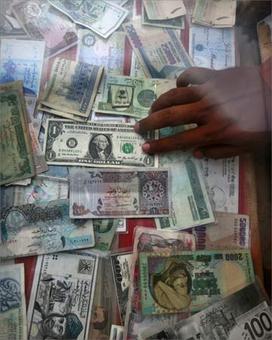
The International Monetary Fund on Wednesday raised India's growth forecast to 5.4 per cent for 2009 and said that the global economy is beginning to pull out of a recession.

India's forex reserves declined by $1.27 billion to $561.58 billion for the week ended January 6, the Reserve Bank said on Friday. The overall reserves had increased by $44 million to $562.85 billion in the previous reporting week after two consecutive weeks of the slide. In October 2021, the country's foreign exchange kitty reached an all-time high of $645 billion.

The country will get more voice in decision-making at IMF.

India's external debt rose by 16.46 per cent to $261.4 billion at the end of 2009-10 on the back of an improved liquidity in the global financial system along with an additional allocation of special drawing rights of the International Monetary Fund.

The IMF on Tuesday cut India's economic growth forecast by 0.5 percentage points to 9 per cent for the current fiscal year, with its chief economist Gita Gopinath saying that the slight downgrade is mainly due to the impact of the spread of the Omicron variant. "If you look at the 2021-22 fiscal year, we have a slight downgrade of -0.5 percentage points and for the next fiscal year 2022-23 we have a slight upgrade of 0.5 percentage points. So, growth for the previous fiscal year is now nine per cent and for this year now is at nine per cent. We moved it up slightly," Gopinath told reporters during a news conference in Washington. In its latest update of World Economic Outlook on Tuesday, the International Monetary Fund has cut India's economic growth forecast to 9 per cent for the current fiscal year ending March 31, joining a host of agencies which have downgraded their projections on concerns over the impact of the spread of Omicron on business activity and mobility.
The United States continues to remain the world's largest economy.
Foreign exchange reserves increased $294 million to $143.353 billion for the week ended October 7, 2005, according to the weekly supplement released by the Reserve Bank of India on Saturday.
The IMF, in its semi-annual global economic forecast, released in Washington on Wednesday, says that China is expected to grow by more than 11 per cent in 2007, while India is expected to expand by nine per cent. It, however, says growth may moderate somewhat across emerging Asia in 2008, reflecting slower trade growth as well as some policy tightening in countries facing overheating pressures.

The IMF on Tuesday projected a growth rate of 6.1 per cent for India in 2023, which is a 0.2 percentage point upward revision compared with the April projection. This is reflective of the "momentum" from stronger-than-expected growth in the fourth quarter of 2022 as a result of stronger domestic investment, the International Monetary Fund (IMF) said. "Growth in India is projected at 6.1 per cent in 2023, a 0.2 percentage point upward revision compared with the April projection," it said in its latest update of the World Economic Outlook.

The country's foreign exchange reserves increased by $3.85 billion to $601.36 billion in the week ended May 27, according to RBI data. In the previous week, the reserves rose by $4.23 billion to $597.51 billion. During the reporting week, the rise in forex reserves was due to an increase in the Foreign Currency Assets (FCA) and the gold reserves, according to the Weekly Statistical Supplement released by the Reserve Bank of India (RBI) on Friday.
Rediff.com spoke to Raghuram Rajan about his book, what enthuses him about the Indian economy, and what are the concerns he has with India's chaotic progress . . .

'India's emergence as a top crypto market comes despite a regulatory and tax environment that can be challenging for the industry to navigate.'
